
 There are many alcoholic beverages which are considered to be gluten-free. Research indicates the distillation process should eliminate any harmful gluten peptides, even if gluten-containing grains were used. Examples of distilled alcohol include: bourbon, gin, vodka*, scotch & rye whisky. Also considered to be gluten-free: brandy, mead, sherry, port, grappa, ouzo, tequila, rum, and vermouth. However, some manufacturers may add gluten-containing ingredients in the form of added flavorings, which may contain barley malt, so any product with added flavoring requires checking. Wine is generally thought to be gluten-free (**see note on wine below), but not wine-coolers, as they may contain barley malt. Liqueurs or Cordials are made with distilled alcohol & added flavorings and can be gluten-free, but check the label ingredients for certainty, if flavor is added. Sake, made from rice, could be gluten-free but not always, as flavorings such as barley may have been added (TY-KU sake’s are gluten-free). Most Hard ciders are safe, but barley could be added as a flavoring (check out Crispin, Strongbow, Angry Orchard, Woodchuck & Magners for gluten-free options).
Alcoholic beverages NOT gluten-free: Ale, non gluten-free Beer, Lagers, some Wine-coolers (look for barley malt as an ingredient – though there are some wine-coolers which are GF). Mixes, such as Bloody Mary, Margarita, etc. may contain barley malt. Be sure to check the ingredients or call the manufacturer. According to one gluten-free alcohol listing site the GODIVA line and some SMIRNOFF (FMB, Twisted V, Ice) are NOT gluten-free, and as mentioned above, Sake & Hard cider may or may not be gluten-free.
*Note on Vodka: Though the National Institutes of Health, and other celiac experts say all unflavored distilled alcohol is safe, some people claim they have a reaction to grain-based vodkas. If you are among this group, Smirnoff, Tito’s are made with corn and there are several vodkas made from potatoes including: Chopin, Teton Glacier, Cirrus and Luksusowa, Bombora and CooranBong from Australia. Here is a good list of gluten-free vodka’s from About.com http://celiacdisease.about.com/od/GlutenFreeAlcohol/a/Gluten-Free-Vodka-List.htm?nl=1
Read more on BRANDY here.
**Note on Wine: Wine by nature is gluten-free, as no grains are added. There have been numerous debates on whether wines aged in oak barrels sealed with wheat flour paste are safe for people with Celiac and gluten-sensitivity. The consensus is – yes, the majority of people should be able consume a variety of wines without experiencing any symptoms. Having said that, there are some who swear they have become sick after drinking a particular wine. It has been suggested possibly the sulfites in the wine, and not the gluten, may have been the cause of symptoms, as many are sensitive to sulfites. Yes, the practice of sealing barrels with wheat flour is indeed used, most commonly with aged European wines, though some American vineyards use this method of sealing as well. Some wine experts believe the barrels are used so frequently, and cleaned in between, that if there were any remaining residue it would be in trace amounts. Many wineries in America, New Zealand & other countries use newer stainless steel barrels, or seal their barrels with something other than flour paste – such wines include Riesling, Sauvignon Blanc, Pinot Grigio and Bag-in-the-Box wines. Tricia Thompson of Gluten Free Watchdog recently (Oct. 2012) tested wines (Cabernet Sauvignon and Merlot) from one winery for gluten and bottom line – very low gluten was detected (<10 at the highest level). You can view her report here. There was also this study that tested wines and did detect low levels of gluten. So if you react to even the smallest amount (less than 20 ppm), you may want to choose wines that were not aged in oak barrels, or “fined” (to clarify the wine) with gluten. So there you have it. Now it is up to you to proceed as you wish. Perhaps you will want to contact a few of your favorite wineries to pose the question to ease your mind, or like many you will continue to drink a variety of wines, without worry.
What you certainly may want to consider is avoiding spirits altogether for a period of time, to give your gut a chance to heal!
And for the Beer enthusiast – There are several companies which produce a line of thirst quenching gluten-free beers. Instead of using malted barley, other grains such as sorghum or millet are used. A few examples include Bard’s Tale, Brunehaut, Estrella Damm Daura, Glutenberg, New Planet, Harvester Brewing, Redbridge, Goose Island, Lake Front, Ramapo Valley for Passover Beer, Australia’s O’Brien, UK’s Greens, Germany’s Schnitzer Brau
{See GF by Category/SPIRITS for a listing of a few Beer manufacturer websites}
Read DEPARTMENT OF THE TREASURY Alcohol and Tobacco Tax and Trade Bureau’s Interim Policy on Gluten Content Statements in the Labeling and Advertising of Wines, Distilled Spirits, and Malt Beverages (11 February 2014), open HERE.
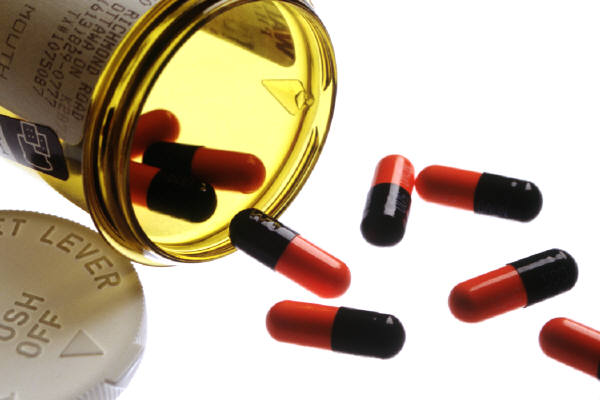 Gluten (as a binding agent or filler) may be present in medication & supplements, listed as an “inactive ingredient”, and unfortunately there is currently no legal requirement (see “current legislation” below) of the manufacturer to include the source of gluten on the label, therefore it is imperative to speak with your pharmacist, and/or call the manufacturer directly to inquire if your medication contains gluten. Do not assume if you are prescribed a medication from your physician it is automatically void of gluten. If the medication prescribed is found to contain gluten, speak with your pharmacist about finding an alternative (this may also involve a conversation between pharmacist and physician to find the proper alternative).
The following ingredients in medication/supplements should be questioned:
– Wheat – Starch/modified starch/sodium starch glycolate/pregelantinized starch/pregelantinized modified starch – Caramel coloring (possibly contains barley malt) – Dextrates – Dextrins – Dextrimaltose (possibly contains barley malt)Note: Often when a manufacturer is asked if a product is gluten-free, they will say they cannot guarantee it is, because they are unable to verify if the materials they use from an outside source are, in fact, gluten-free. At this point, it is a personal choice whether to use the medication. Never assume that a “generic” brand has the same ingredients as the “brand” name product. You must check ingredients of both.
Visit this trusted website, hosted by a clinical pharmacist, for a list of gluten-free medications, but we always caution ingredients can change at any time so it is best to contact the manufacturer directly: http://www.glutenfreedrugs.com/
http://www.drugs.com/pharmaceutical-companies.html
http://www.therubins.com/resource/drugdirect.htm
Tips: Take your cell phone with you when you head to the pharmacy, so you can call manufacturer to inquire if a product is gluten-free! Here are a few popular products that we know to CONTAIN GLUTEN: BEANO (prescribed for gas); ADVIL ® Liqui-Gels® and Advil® Migraine (http://www.advil.com/faqs?tid=15)
Current Legislation: A proposed legislation for labeling of medication (Gluten in Medication Identification Act of 2012 – H.R. 4972) was introduced in the House of Representatives ton April 27, 2012, which would require all manufacturers of pharmaceuticals to clearly identify the source of any inactive ingredients used in their products. According to govtrack.us the Bill “was assigned to a congressional committee on April 27, which will consider it before possibly sending it on to the House of Senate as a whole … This bill has a 2% chance of being enacted”. (Contact your state representataive http://www.capwiz.com/celiac/issues/alert/?alertid=61277271&type=CO– tell him/her this Bill should be enacted!). Here is more info on Bill: http://www.capwiz.com/celiac/issues/bills/?bill=62670596&size=full & http://www.govtrack.us/congress/bills/113/hr2003/text
Bill finally introduced to Congress in October 2015, find out more here.
View NFCA’s Q&A (Nov. 2013) with Congressman Tim Ryan, who sponsored above bill.